
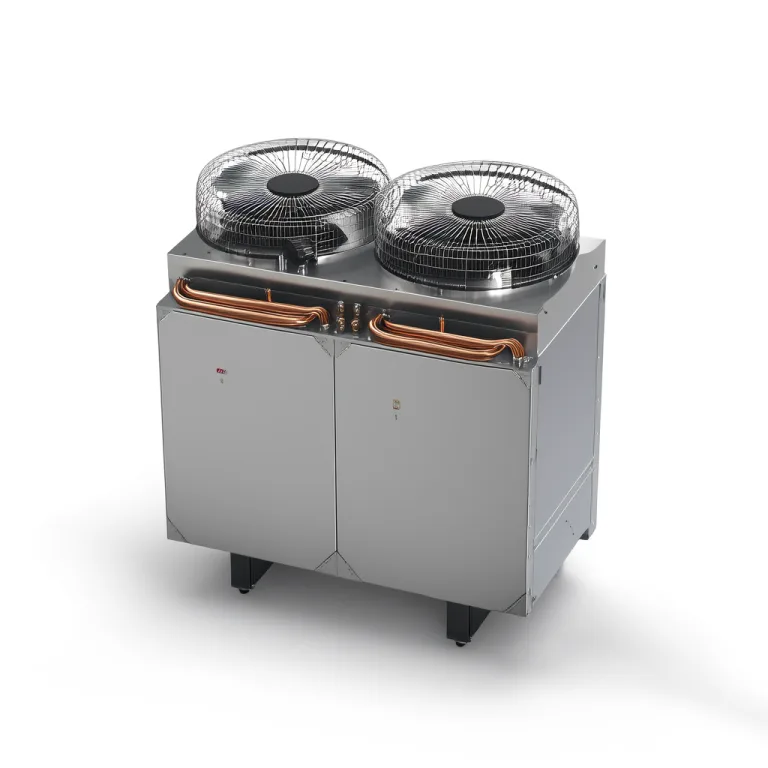
Air Cooled Chiller
Air Cooled Chiller for industrial applications.
About Air Cooled Chiller
Air Cooled Chiller for industrial applications.
| Domain | hvac |
|---|---|
| Product Family | Cooling Equipment |
Who Works With Air Cooled Chiller?
6 engineering roles are connected to Air Cooled Chiller based on verified research evidence.
Service Technician
The title denotes a field-based technical role responsible for servicing, maintaining, and troubleshooting rotary tillers — consistent with the widely recognized 'Service Technician' occupational category in agricultural engineering. Responsibilities (hydraulic checks, gearbox lubrication, tine replacement, calibration) confirm hands-on maintenance and operational support functions. While 'Rotary Tiller' is product-specific, the core role maps to the standardized 'Service Technician' with agricultural equipment specialization.
Maintenance Engineer
The title denotes a recognized engineering role focused on maintenance of servo drives; 'Servo Drive' is a product-specific modifier, but the core professional role is 'Maintenance Engineer', a widely accepted title in industrial electrical engineering. Evidence from LinkedIn job postings confirms its usage for professionals performing fault diagnosis, root cause analysis, and corrective maintenance on servo drive systems.
HVAC-R Technician
This is a formally recognized occupational title defined by the U.S. Bureau of Labor Statistics (BLS) with standardized duties directly applicable to air-cooled chillers—including installation, maintenance, troubleshooting, operation, and inspection. The role is not product-specific in naming (no 'chiller' or 'air-cooled' prefix), so product_specific_title = false; however, specialization in chiller systems is supported by BLS evidence citing growing demand for expertise in high-efficiency air-cooled systems.
Maintenance Technician
HVAC Technician
Applications Engineer
Applications Engineer is a well-established professional role in industrial equipment sectors, especially for process machinery like ribbon blenders. In the beverage context, they bridge technical capability and customer process requirements — advising on blender selection, configuration (e.g., material of construction, drive type, explosion protection), integration into production lines, and operator training. The evidence explicitly links them to ribbon blender support (installation, FAT/SAT, training), confirming functional relevance.