
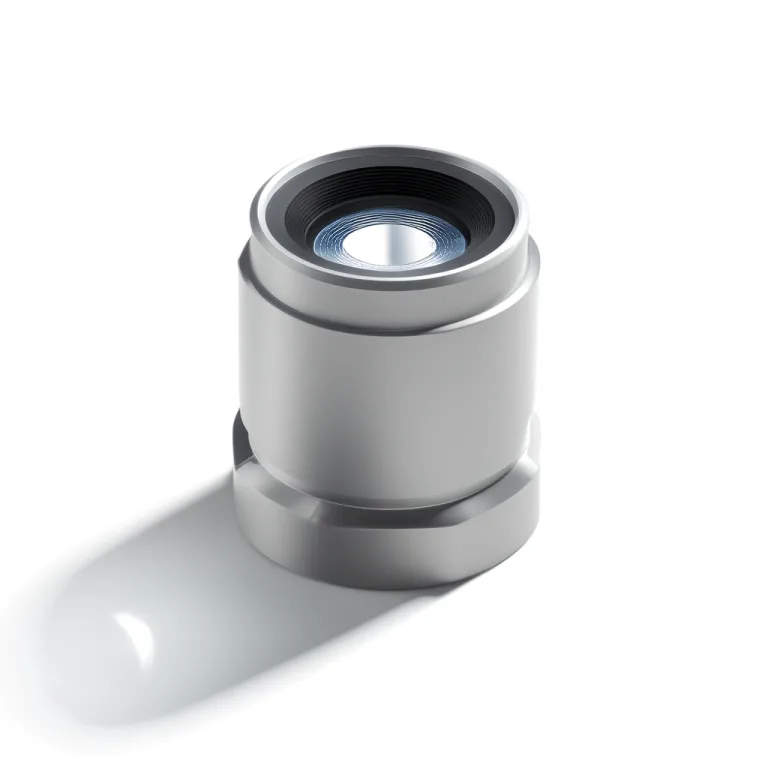
Heat Flux Sensor
Heat Flux Sensor for industrial applications.
About Heat Flux Sensor
Heat Flux Sensor for industrial applications.
| Domain | hvac |
|---|---|
| Product Family | Sensors |
Who Works With Heat Flux Sensor?
7 engineering roles are connected to Heat Flux Sensor based on verified research evidence.
Building Performance Engineer
Building Performance Engineer is a recognized, distinct professional role in the building science and HVAC engineering domain. It is explicitly cited in the evidence as a user of heat flux sensors for quantifying thermal losses/gains in HVAC components (ductwork, coils, heat exchangers), indicating direct technical engagement with sensor selection, specification, testing, and inspection. The role integrates HVAC systems knowledge with instrumentation and data-driven performance analysis — consistent with industry standards (e.g., ASHRAE, BOMA, LEED AP BD+C). Not product-specific (no embedded product name), and not reducible to a more generic title without loss of functional meaning.
Thermal Engineer
Thermal Design Engineer is a widely recognized engineering role specializing in thermal management of electronic and mechanical systems. In the context of data center in-row coolers—especially for industrial cloud infrastructure—it directly contributes to designing cooling capacity, airflow paths, heat dissipation, and integration with thermal loads from IT equipment. While 'Thermal Design Engineer' includes 'Design', it is not a task but a formal job title (e.g., listed in IEEE, ASHRAE, and semiconductor/data center industry job taxonomies). It generalizes to 'Thermal Engineer' as the canonical role; 'Design' is part of the standard naming convention—not product-specific prefixing (e.g., not 'In-Row-Cooler Thermal Engineer'). The role is explicitly tied to thermal performance validation, specification of cooling parameters, and system-level thermal testing.
Commissioning Agent
Commissioning Agent is a widely recognized professional role in HVAC and building systems engineering, explicitly cited in the evidence as users of heat flux sensors for quantifying thermal performance. The role involves verifying sensor installation, validating measurements, and interpreting data during system commissioning — directly relating to COMMISSION, TEST, and INSPECT activities. Though sometimes used interchangeably with 'Commissioning Engineer', 'Commissioning Agent' is a valid title per ASHRAE Guideline 0-2013 and industry practice, especially for third-party or independent commissioning professionals.
Test Engineer
Thermal Test Engineer is a recognized engineering role specializing in thermal performance evaluation; evidence confirms its use in HVAC contexts involving heat flux sensors, data logging, and system diagnostics. While 'thermal' denotes a domain specialization, the core role is 'Test Engineer'—a widely accepted professional title in engineering practice. It is not product-specific (e.g., not 'Heat Flux Sensor Test Engineer'), so product_specific_title = false.
HVAC Technician
Sensor Engineer
HVAC sensor engineer is a domain-specialized variant of the recognized professional role 'Sensor Engineer', with documented emphasis on thermal sensing (including heat flux sensors), HVAC system integration, calibration, and ASHRAE compliance. While 'HVAC' denotes application context, the core function—designing, specifying, testing, and integrating sensors—is consistent with the broader Sensor Engineer role. The specialization is genuine and industry-attested, but the canonical form abstracts away the product/application prefix per guidelines.
Energy Analyst
Building Energy Analyst is a recognized professional role in HVAC and building performance engineering, commonly involved in selecting, specifying, operating, and interpreting data from thermal sensors—including heat flux sensors—for energy modeling, system diagnostics, and compliance reporting. While 'Building' denotes application context (not product-specific title), the core function aligns with energy systems analysis and sensor-informed decision-making in HVAC domains.